

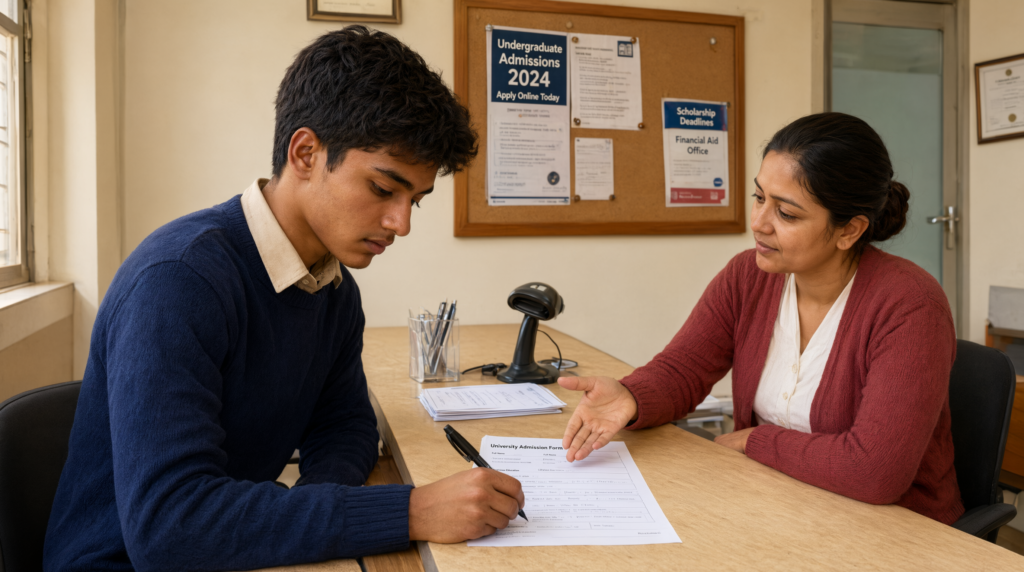
Before you can start your BSc CSIT journey, you need to clear two hurdles: meeting the eligibility criteria and successfully navigating the admission process. Both trip up more students than expected — not because the requirements are complicated, but because the details (grades, subjects, quotas) are easy to overlook.
This guide walks through exactly who qualifies for BSc CSIT, what the entrance exam expects, and the step-by-step process from application to enrollment.
Who Is Eligible for BSc CSIT?
To apply for BSc CSIT admission in Nepal, you need to have completed +2 Science stream (NEB, CBSE, or an equivalent board), and both the Physical group and Biology group are eligible to apply. This is a common point of confusion — many students assume only the Physical (Math) group qualifies, but that isn’t the case.
Specific eligibility requirements include:
- Completion of 10+2 Science or equivalent, generally with at least a ‘C’ grade in all subjects
- Physics and Mathematics studied at 100 marks each across Grades 11 and 12 — this applies even to Biology-stream students, who must have taken Physics and Math alongside Biology
- A-Level applicants need a minimum D grade in both Physics and Mathematics
- For older grading systems: second division in I.Sc. or equivalent
In short, what makes BSc CSIT eligibility distinct from many other science-based programs is that it doesn’t lock out Biology-stream students — as long as they’ve studied Physics and Math, they’re in the running.
The BSc CSIT Entrance Exam: What to Expect
Meeting the eligibility criteria only gets your foot in the door. The real gatekeeper is the TU IOST entrance exam, a mandatory annual test — no student can enroll in any TU-affiliated college without clearing it.
Exam format:
- 100 marks total, fully objective/MCQ
- 2-hour duration
- No negative marking, so attempting every question is worth it
Subject-wise weightage:
| Subject | Level | Marks |
| Mathematics | Grade 11 | 25 |
| Physics | Grades 11 & 12 | 25 |
| Chemistry or Biology | Grades 11 & 12 | 25 |
| General IT | Grades 11 & 12 | 10 |
| English | Grades 11 & 12 | 15 |
The pass mark is 35%, though this is a minimum threshold, not a guarantee of a seat — admission is merit-based, so a higher score significantly widens your college options.
Admission Selection Process: How Seats Are Allocated
Once entrance results are out, colleges don’t select students by pass/fail alone. Admission is granted based on a combination of entrance exam score and +2 academic performance, and seats are split by quota:
- 80% Open Quota — allocated purely on merit (entrance score + academic record)
- 20% Samabeshi (Inclusive) Quota — reserved for students from specific inclusive categories as defined under TU regulations
This quota system means two students with similar entrance scores could end up at very different colleges depending on which quota they applied under and how competitive that particular college’s cutoff was that year.
Step-by-Step Admission Process
Here’s how the BSc CSIT admission process typically unfolds from start to finish:
- Check eligibility — Confirm your +2 Science stream results meet the Physics/Math requirement (Biology-stream students should double-check their Physics and Math marks specifically).
- Watch for the official TU IOST notice — The entrance exam application window opens once a year, announced by the TU IOST Dean’s Office at Balkhu.
- Fill and submit the application form — Pay the prescribed form fee within the normal deadline to avoid the higher late-fee window.
- Prepare for the entrance exam — Focus especially on Grade 11 Mathematics, since it’s often the most scoring section, and take multiple full-length mock tests before exam day.
- Sit for the entrance exam — A 2-hour, 100-mark MCQ test with no negative marking.
- Check your results and merit ranking — Your combined entrance score and +2 performance determine which quota and colleges you’re eligible for.
- Apply to colleges — Shortlist and apply to TU-affiliated colleges based on your merit rank, comparing fees, infrastructure, and location.
- Complete enrollment — Submit required documents (mark sheets, character certificate, migration/transfer documents where applicable) and pay admission fees to confirm your seat.
Documents Typically Required for Admission
While exact requirements vary slightly by college, most BSc CSIT admissions ask for:
- +2 mark sheets and provisional/character certificate
- Citizenship certificate (or equivalent ID for international applicants)
- Passport-size photographs
- Entrance exam admit card and result
- Migration certificate, if transferring from another board or university
It’s worth confirming the exact document checklist with your target college directly, since some private colleges have additional requirements during counseling.
Tips to Strengthen Your Admission Chances
- Prioritize Grade 11 Mathematics in your preparation — it carries a full 25 marks and tends to be the most scoring section
- Solve past entrance question sets and full-length mock tests consistently; a focused 6–8 week preparation plan is enough for many students
- Apply within the normal fee deadline to avoid paying a double late fee
- If you’re a Biology-stream student, don’t assume you’re ineligible — verify your Physics and Math marks meet the requirement before ruling BSc CSIT out
Conclusion
BSc CSIT eligibility criteria and the admission process are more accessible than many students assume — both Physical and Biology stream +2 graduates can apply, provided the Physics and Math requirement is met. The real differentiator is entrance exam performance, since it directly determines which colleges and quota categories you can access.
If you’re planning to apply this cycle, start preparing early, keep an eye on the official TU IOST notice, and get your documents in order well before the application deadline.